Collect dynamic payments with VRP
Summary: This article explains how Variable Recurring Payments (VRP) enable businesses to collect dynamic, usage-based payments accurately and in real time. It outlines how VRP works, key benefits over cards and debit orders, and practical use cases for industries with variable pricing.

Collecting payments doesn’t look the same for every business. Depending on your business model, collections can be a clean and simple way to collect revenue or hinder its growth.
If you charge a fixed subscription, solutions like DebiCheck or recurring payments are simple, automated ways to collect securely. However, in industries with fluid pricing like hotels, car rentals, or delivery apps, the final amount can vary from the initial quote. In such cases, collecting revenue with traditional methods can create complexity.
What is VRP?
Usage-based businesses need to bill different amounts every month, depending on consumption. To keep delivering services without disruption, they need a flexible way to collect the right amount.
Variable Recurring Payments (VRP) allow businesses to do exactly that. Using VRP as a payment method, businesses get permission from the customer to collect variable amounts from their account within a customer-consented maximum amount. This gives them the flexibility to bill accurately, while customers stay in control of how much can be debited.
How does VRP work?
VRP is built on open banking APIs that facilitate secure, bank-to-bank payments.
Instead of storing card details or requesting permission for every collection, the customer sets up a secure digital mandate that authorises a business to initiate future payments within agreed parameters. These parameters can include limits on the maximum amount, frequency of payments, or time period.
Once the authentication is active, payments are triggered and settled instantly without additional approvals each time.
What are the benefits?
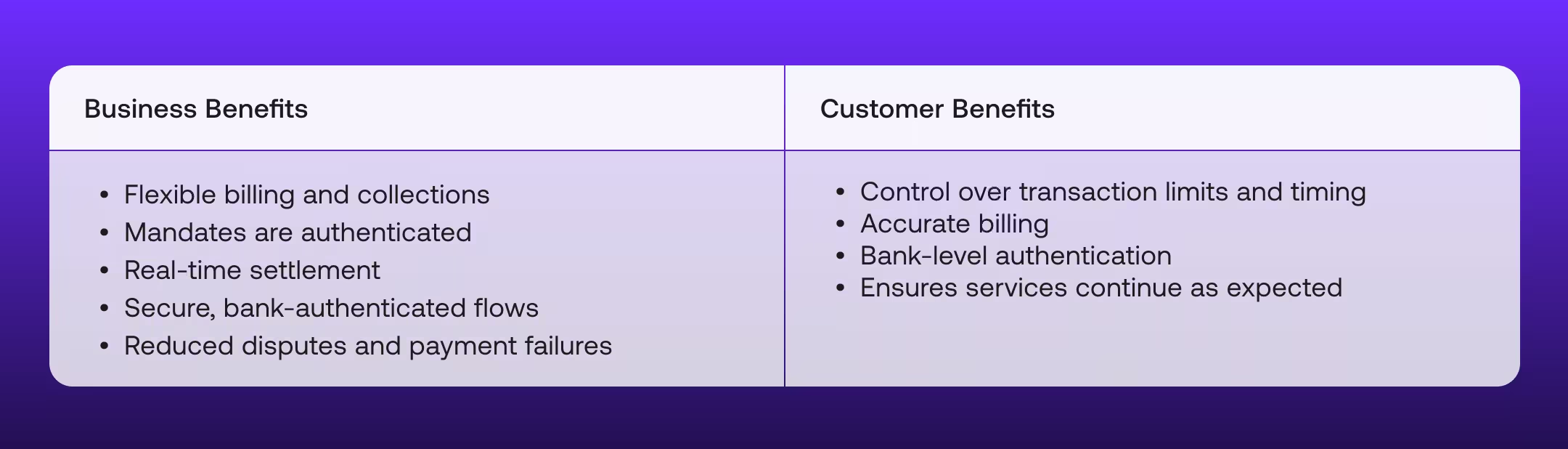
Compared to recurring payments, VRP reduces card fraud risk, chargebacks, and accelerates settlements. And unlike traditional debit orders and DebiCheck, collections are flexible and settlements are immediate.
Industry use cases
Ride-hailing and on-demand delivery
After a trip or delivery, the final cost often changes due to distance, tolls, waiting time, or surge pricing. With VRP, customers can authorise the app to charge up to a certain maximum amount, so the final payment is accurate and can be collected automatically, even including tips. This results in pain-free billing and faster payouts for drivers.
Grocery delivery
When customers order groceries, prices can change if items are substituted or extras are added. With VRP, the app can automatically charge up to a pre-agreed maximum amount without asking for approval each time. This makes checkout faster, reduces friction, and ensures customers get their groceries without delays.
Utilities and pay-as-you-go services
Usage-based services like electricity, water, mobile data, or cloud storage fluctuate month to month. Instead of collecting fixed debit order amounts or chasing unpaid bills, merchants can use VRP to automatically collect the actual usage amount. It supports accurate billing, improves collection rates, and reduces manual intervention.
Subscriptions with upgrades or add-ons
Subscription businesses often need to charge more than the base monthly fee for additional profiles, extra storage, or feature upgrades. VRP allows businesses to collect these updated charges without sending new payment links or requiring users to reauthorise.
Stabilise collection rates and customer retention
VRP is a smarter way for businesses to collect fluctuating revenue consistently, reduce failed payments, and give customers more control and confidence in how much they pay. Whether you’re billing for usage, subscriptions, services, or anything in between, VRP removes friction and brings stability to collections that are anything but fixed.
FAQs
What are Variable Recurring Payments (VRP)?
VRP is a payment method that allows businesses to collect variable amounts from a customer’s bank account within agreed limits, using a customer-authorised digital mandate.
How does VRP differ from debit orders or DebiCheck?
Unlike debit orders and DebiCheck, VRP supports variable amounts and settles instantly. Customers approve flexible parameters upfront rather than fixed amounts per collection.
How does VRP work?
Customers authenticate a digital mandate via their bank, setting limits on amount, frequency, or duration. Once authorised, payments can be triggered automatically and settled in real time without repeated approvals.
What types of businesses benefit most from VRP?
Usage-based and variable pricing businesses such as ride-hailing, grocery delivery, utilities, pay-as-you-go services, and subscriptions with add-ons benefit most from VRP.
What are the benefits of VRP for businesses?
VRP enables flexible billing, real-time settlement, reduced payment failures, fewer disputes, and more accurate revenue collection without manual intervention.
What are the benefits of VRP for customers?
Customers retain control through clear spending limits, benefit from bank-level authentication, and avoid repeated payment prompts while ensuring services continue uninterrupted.
Is VRP more secure than card payments?
Yes. VRP uses secure, bank-authenticated flows and does not rely on stored card details, reducing fraud risk and chargebacks.
How does VRP improve collection rates?
By enabling instant settlement and flexible billing aligned to actual usage, VRP reduces failed payments and improves consistency in collections.
Stabilise collection rates and customer retention with VRP